
Fishing rod length is a crucial factor impacting casting distance, accuracy, and overall angling success. Selecting the appropriate length
enhances control, sensitivity, and the ability to navigate diverse fishing environments effectively. Understanding these nuances is paramount for any angler.
Rod length directly influences leverage, power transmission, and the angler’s ability to present lures or bait precisely. A well-chosen rod
length complements technique and target species, maximizing fishing enjoyment and yield. It’s a foundational element of a successful fishing setup.
Understanding the Importance of Rod Length
Rod length profoundly impacts several key aspects of fishing performance. A longer rod generally facilitates greater casting distance, allowing anglers to reach fish holding further from shore or boat. Conversely, shorter rods excel in situations demanding accuracy, such as tight spaces or precise lure presentations near cover.
The length also dictates the amount of leverage an angler has during a fight with a fish. Longer rods can help absorb powerful runs, while shorter rods offer more direct control. Furthermore, rod length influences sensitivity; longer rods often provide better feel for subtle strikes, particularly when targeting species like trout.
Considering the environment is vital. High banks or brushy areas necessitate longer rods to accommodate backcasts, while kayak fishing often benefits from shorter, more manageable lengths. Ultimately, understanding how rod length interacts with casting technique, target species, and fishing conditions is essential for optimizing success.
Factors Influencing Rod Length Choice
Several critical factors dictate the ideal fishing rod length for a given situation. The target species is paramount; panfish and trout often benefit from shorter rods (4-9 feet), while bass and pike frequently require longer lengths (7-8 feet). Fishing technique also plays a significant role – flipping sticks demand specialized shorter lengths, while distance casting favors longer rods.
The fishing environment heavily influences the decision. Rivers with high banks or dense vegetation necessitate longer rods for clear backcasts. Conversely, tight spaces or kayak fishing call for shorter, more maneuverable options. Finally, angler height impacts comfort and control; taller anglers may prefer longer rods for better leverage.
Considering line weight and rod action is also crucial. Heavier line often pairs well with longer rods, while lighter line benefits from shorter, more sensitive options. Ultimately, a holistic assessment of these factors ensures optimal performance.
Rod Lengths for Specific Fishing Types
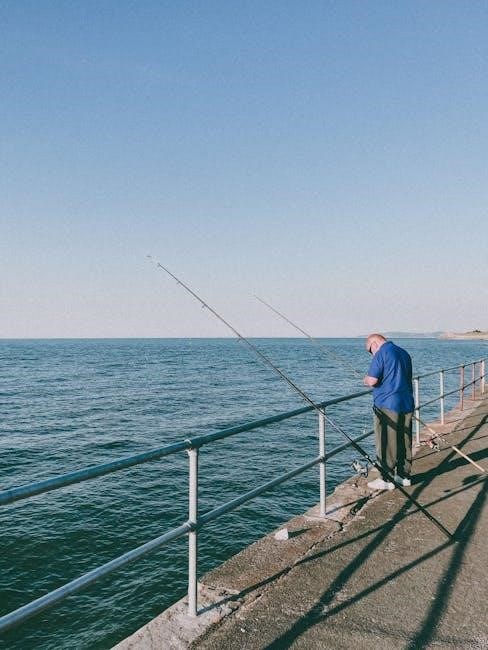
Rod length varies greatly depending on the fishing type. From short panfish rods to longer bass and trout options, selecting the right length
optimizes performance and enjoyment for each angling pursuit.
4-6 Foot Rods: Ideal for Small Streams and Panfish
Rods in the 4-6 foot range excel in confined spaces like small streams and around heavy cover. Their shorter length provides enhanced accuracy and control, crucial when precise casts are needed amidst obstacles. This length is particularly well-suited for targeting panfish – bluegill, crappie, and perch – where finesse and delicate presentations are key to success.
The compact size also makes these rods incredibly portable, ideal for backpacking or walking long distances to remote fishing spots. They are often favored by anglers who enjoy a more intimate connection with the fish, allowing for direct feel and quick reactions to subtle bites. Furthermore, these shorter rods are often more affordable, making them a great entry point for beginner anglers or those seeking a specialized tool for specific situations.
For kayak fishing or fishing from canoes, a shorter rod minimizes the risk of snagging on the vessel and provides better maneuverability in tight quarters. They truly shine when navigating challenging environments where a longer rod would be cumbersome and impractical.
6-8 Foot Rods: The Versatile All-Rounders
Rods spanning 6 to 8 feet represent the sweet spot for versatility, catering to a wide array of fishing scenarios and species. Often considered the “do-it-all” option, these rods handle bass, trout, panfish, catfish, and even pike or pickerel with reasonable effectiveness. They strike a balance between casting distance, accuracy, and fish-fighting power, making them a popular choice for anglers who don’t want to specialize too heavily.
This length provides sufficient leverage for casting a variety of lure weights and line types, while remaining manageable for all-day use. They are excellent for general freshwater fishing, whether from shore, a boat, or wading. The 6-8 foot range is particularly beneficial for anglers new to the sport, offering a forgiving platform to learn and refine their techniques.
These rods are a solid foundation for a beginner’s tackle box, capable of handling most common fishing situations encountered in lakes, ponds, and rivers. They are a practical and reliable choice for the angler seeking a versatile tool.
7-9 Foot Rods: Best for Trout Fishing
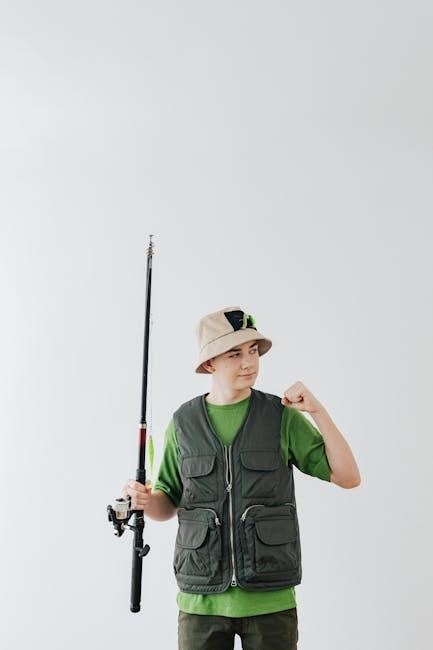
Rods in the 7 to 9-foot range are frequently recommended for trout fishing, offering advantages in both presentation and control. This length allows for longer casts, crucial for reaching distant rises or covering more water efficiently. The extended reach also aids in line control, minimizing drag and achieving a natural drift – essential for fooling wary trout.
Longer rods enhance the ability to mend the line, correcting for currents and maintaining a natural presentation. They also provide increased sensitivity, allowing anglers to detect subtle strikes. A 7-9 foot rod is particularly effective when fishing larger rivers or streams where longer casts are necessary to navigate currents and obstacles.
For fly fishing, this length is standard, providing the necessary leverage for delicate presentations. Even with spin or baitcasting gear, the extended reach improves casting accuracy and fish-fighting capabilities when targeting trout.
7-8 Foot Rods: Bass Fishing – General Purpose
A 7 to 8-foot rod represents a versatile choice for general-purpose bass fishing, striking a balance between casting distance, accuracy, and maneuverability. This length is suitable for a wide array of techniques, including crankbaiting, spinnerbaiting, and Texas-rigged plastics. It provides sufficient leverage for solid hooksets and controlling bass in various cover conditions.
These rods excel in situations where all-around performance is needed, making them ideal for anglers who prefer not to specialize in a single technique. They offer a good compromise for fishing from boats or shorelines, adapting well to different environments. The length allows for comfortable casting and retrieving without sacrificing control.
For beginners, a 7-8 foot rod is an excellent starting point, providing a forgiving platform to learn and experiment with different bass fishing methods. It’s a reliable option for covering a broad spectrum of bass fishing scenarios.
7.6 Foot Rods: Bass Fishing – Casting Freshwater
A 7.6-foot casting rod is specifically designed for freshwater bass fishing, offering enhanced casting distance and accuracy. This length is particularly well-suited for techniques requiring longer casts, such as utilizing crankbaits, swimbaits, and heavier jigs. The extra length provides increased leverage during the cast, resulting in greater lure distance and control.
Rods of this length often feature a fast action, enabling quick hooksets and efficient power transfer. They are favored by anglers targeting bass in open water or when covering larger areas of the lake or river. The 7.6-foot length also aids in managing line slack during retrieves, improving sensitivity and bite detection.
The Shimano Sellus Casting Freshwater Bass Casting Fishing Rod, measuring 76 inches, exemplifies this length’s benefits, providing excellent reach and leverage for effective bass fishing.
Rod Length and Fishing Techniques
Rod length significantly impacts technique; longer rods excel at distance casting, while shorter rods prioritize accuracy in confined spaces. Flipping sticks demand specific length considerations for optimal control.
Long Rods for Distance Casting
Longer fishing rods, typically exceeding 7 feet, are specifically engineered to maximize casting distance. This advantage stems from the increased leverage they provide during the cast, allowing anglers to generate greater line speed and propel lures further. This is particularly beneficial when targeting fish holding in areas inaccessible with shorter casts.
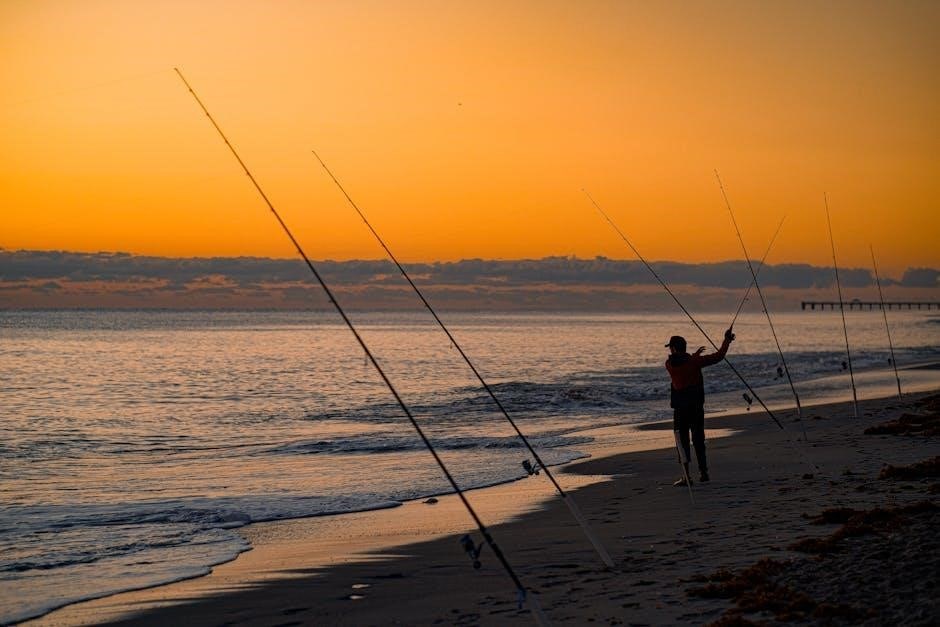
The extended length also aids in line control, reducing friction and enhancing the smoothness of the cast. This translates to improved accuracy, even at longer ranges. However, it’s important to note that longer rods can be more challenging to maneuver in tight spaces, requiring ample backcast room. They are ideal for open water scenarios where distance is paramount, such as surf fishing or targeting fish in expansive lakes and reservoirs.
Furthermore, the increased rod length contributes to better shock absorption during the cast, minimizing the risk of breaking the line or damaging the rod itself. This makes them a reliable choice for anglers using heavier lures or fishing in windy conditions.
Short Rods for Accuracy and Tight Spaces
Shorter fishing rods, generally ranging from 4 to 6 feet, excel in situations demanding pinpoint accuracy and maneuverability within confined areas. Their compact size allows for precise lure placement, crucial when targeting fish near cover like trees, rocks, or submerged vegetation. This is particularly valuable in small streams, heavily wooded areas, or kayak fishing scenarios.
The reduced length enhances control, enabling quick, accurate casts even with limited backcast space. This makes them ideal for techniques like flipping and pitching, where precise lure delivery is essential. Shorter rods also offer increased sensitivity, allowing anglers to detect subtle strikes in close proximity.
While sacrificing some casting distance, they prioritize control and finesse, making them a preferred choice for anglers targeting panfish, trout in small streams, or bass in tight cover.
Flipping Sticks and Rod Length Considerations
Flipping sticks, specialized rods for the flipping technique, typically range from 7 to 8 feet in length, though angler height significantly influences optimal choice. This technique involves accurately presenting a bait or lure underhand into heavy cover, demanding exceptional control and sensitivity. Longer flipping sticks (7.5-8ft) offer increased leverage for powerful hooksets and better reach.
However, shorter lengths (7-7.3ft) provide enhanced maneuverability in tight spaces. Angler height plays a crucial role; taller anglers often benefit from longer rods, while shorter anglers may prefer shorter ones for better control. The rod’s action – typically fast or extra-fast – complements the technique, ensuring quick hooksets.
Considering personal preference and fishing environment is vital when selecting a flipping stick length, balancing power, accuracy, and comfort.
Rod Length and Target Species
Target species dictate ideal rod lengths; panfish favor shorter rods (4-6ft), while trout benefit from 7-9ft lengths. Bass fishing utilizes varied lengths,
depending on technique.
Rod Length for Bass
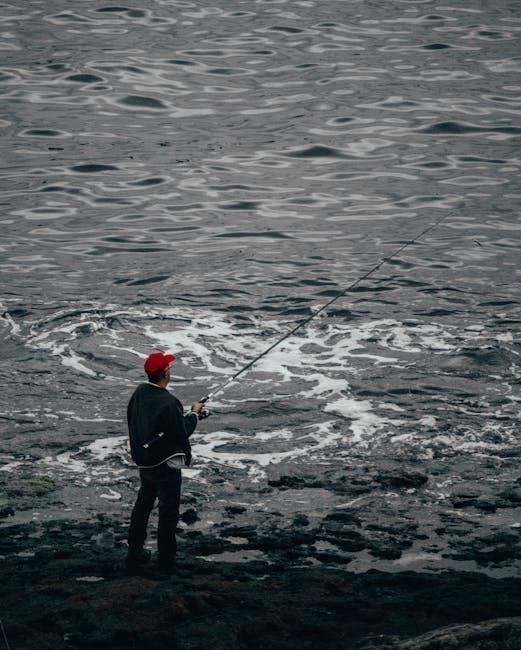
Bass fishing presents a diverse range of rod length options, largely dictated by the specific techniques employed and the fishing environment. A general-purpose bass rod typically falls within the 7-8 foot range, offering a versatile balance for various presentations. However, specialized techniques demand tailored lengths.
For casting freshwater bass, a 7.6-foot rod, like the Shimano Sellus, provides excellent reach and leverage. Flipping sticks, designed for close-quarters presentations around heavy cover, often range from 7’3” to 8’ in length, prioritizing accuracy and power. Anglers targeting bass in open water may prefer longer rods (7.5-8.5 feet) for increased casting distance.
Ultimately, the ideal rod length for bass depends on individual preference and the prevailing fishing conditions. Considering factors like bank cover, casting distance requirements, and lure weight is crucial for selecting the most effective rod length for maximizing bass fishing success.
Rod Length for Trout
Trout fishing often benefits from rods offering sensitivity and precision, making rod length a critical consideration. A commonly recommended length for trout is between 7 to 9 feet, providing a balance between casting distance and control. Shorter rods, around 7 feet, excel in tight streams and brushy environments, allowing for accurate presentations.
Longer rods, extending to 9 feet, are advantageous when fishing larger rivers or when increased reach is needed for longer casts. These lengths also aid in line control and mending, essential techniques for presenting flies effectively to trout. Smaller streams and panfish scenarios often utilize rods in the 4-6 foot range, offering maneuverability.
The ideal trout rod length ultimately depends on the specific fishing conditions and the angler’s preferred technique. Considering the stream size, surrounding vegetation, and desired casting distance will guide the selection of the optimal rod length for trout fishing success.
Rod Length for Panfish
Panfish, including bluegill, crappie, and perch, are often targeted in smaller bodies of water or near structure, influencing ideal rod length choices. Generally, shorter rods ranging from 4 to 6 feet are highly recommended for panfish angling. These lengths provide enhanced control and sensitivity, crucial for detecting subtle bites from these smaller fish.
The maneuverability of shorter rods is particularly beneficial when fishing in tight spaces, such as around docks, trees, or weed beds. They also facilitate accurate casting with lightweight lures and baits commonly used for panfish. A 5-foot rod often strikes a good balance between control and casting distance for versatile panfish fishing.
While longer rods can be used, they may sacrifice the finesse and responsiveness needed for effectively targeting panfish. Prioritizing sensitivity and accuracy with a shorter rod will significantly improve your success rate when pursuing these popular freshwater species.
Rod Length for Pike, Musky, and Pickerel
Pike, Musky, and Pickerel are predatory fish often requiring powerful gear and strategic casting. For these species, rod lengths typically fall within the 7 to 8-foot range, providing a balance of casting distance, leverage, and control during intense fights. Longer rods in this range are particularly useful when covering large areas of water to locate these ambush predators.
The substantial size and fighting power of Musky often necessitate rods leaning towards the longer end of the spectrum – around 7.6 to 8 feet – to effectively manage powerful runs and headshakes. Pickerel, being smaller but still aggressive, can be targeted with rods in the 7 to 7.6-foot range.
Ultimately, the specific rod length will depend on the fishing technique employed and the environment. However, prioritizing a rod capable of handling heavy lures and providing ample backbone is crucial for successfully landing these formidable fish.
Rod Length and Angler Height
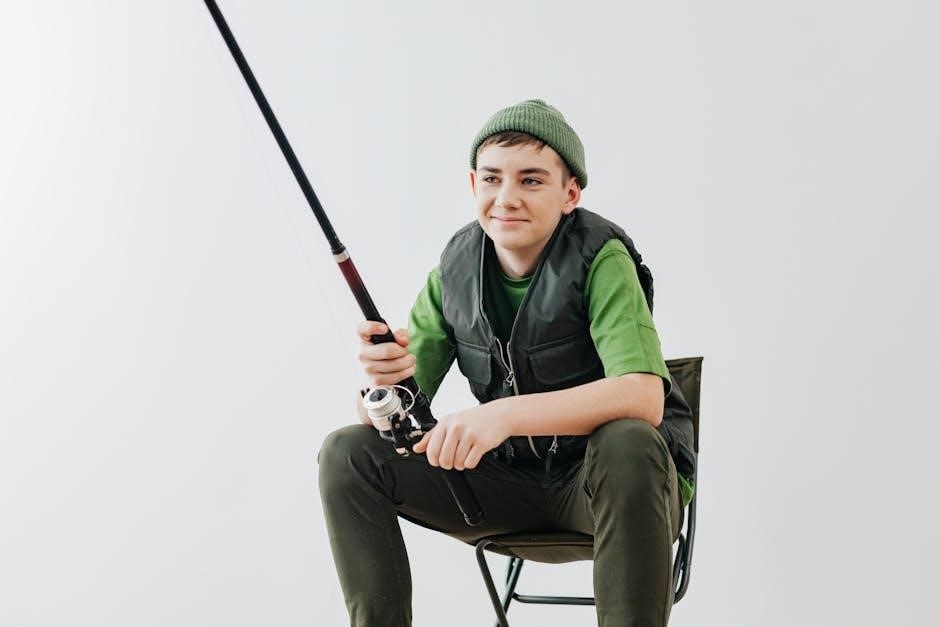
Angler height significantly impacts rod selection, influencing casting comfort and control. A rod length matching your stature ensures optimal leverage and reduces fatigue during extended fishing sessions.
Proper balance between rod length and height prevents awkward casting motions and maximizes sensitivity. Finding this equilibrium enhances casting accuracy and overall fishing performance for all anglers.
How Height Impacts Rod Length Selection
Angler height plays a surprisingly significant role in determining the ideal fishing rod length for comfortable and effective casting. Taller anglers generally benefit from longer rods, typically 7’6” to 8’ or even longer, as these lengths accommodate a wider casting arc and provide greater leverage. Shorter anglers, conversely, often find that rods in the 6’6” to 7’ range offer better control and maneuverability.
The goal is to select a rod length that allows for a natural, fluid casting motion without excessive strain or awkwardness. A rod that’s too long for an angler can lead to fatigue and reduced accuracy, while a rod that’s too short may limit casting distance and power. Consider the rod handle length as well; longer handles can provide better balance for taller individuals.
Ultimately, the best approach is to experiment with different rod lengths to find what feels most comfortable and allows you to cast accurately and efficiently. Don’t hesitate to visit a local tackle shop and try out various rods before making a purchase.
Finding the Right Balance for Comfort
Achieving balance between rod length, angler height, and personal casting style is paramount for a comfortable and productive fishing experience. A well-balanced rod feels natural in hand, reducing fatigue during extended fishing sessions. Consider the rod’s weight and how it distributes along its length; a rod that’s too heavy or poorly balanced can quickly become tiring.
The reel also contributes significantly to overall balance. Pairing a properly sized reel with your chosen rod is crucial. Experiment with different reel sizes and weights to find a combination that feels harmonious. Grip comfort is also essential; ensure the rod’s handle fits your hand comfortably and provides a secure grip, even when wet.
Ultimately, finding the right balance is a personal process. What feels comfortable for one angler may not work for another. Prioritize a rod that allows you to cast accurately and efficiently without strain, maximizing your enjoyment on the water.
Rod Length and Fishing Environment
Environmental factors significantly influence optimal rod length selection. High banks or brushy areas necessitate longer rods for clear backcasts,
while tight spaces demand shorter, more maneuverable options for precise presentations.
Kayak fishing often benefits from shorter rods to avoid snagging on the kayak itself, enhancing control and minimizing obstructions during casting and retrieval.
Rod Length for Rivers with High Banks
Navigating rivers featuring substantial banks presents unique challenges for anglers, demanding careful consideration of rod length. When the terrain rises sharply behind you, a longer rod—typically exceeding 7 feet—becomes invaluable. This extended length provides the necessary clearance for a smooth, uninhibited backcast, preventing frustrating snags on the elevated bank.
A longer rod generates greater leverage, allowing you to lift the line higher and arc it over the obstruction. This is particularly crucial when employing fly fishing techniques, where a delicate presentation relies on a fluid casting motion. Conversely, shorter rods struggle in these conditions, often resulting in tangled lines and lost opportunities. The increased reach also aids in controlling the line and maintaining contact with the lure or fly, even when casting uphill or across challenging currents.
Remember to balance rod length with overall power and action to maintain casting accuracy and sensitivity.
Rod Length for Brushy Environments
Fishing near dense brush and overhanging vegetation necessitates a strategic approach to rod length selection. Shorter rods, generally ranging from 6 to 7 feet, excel in these confined spaces. Their compact size minimizes the risk of snagging branches during the backcast, preserving valuable fishing time and preventing frustrating line breaks.
The reduced length also enhances accuracy, allowing for precise lure placement into tight pockets and around submerged obstacles. A shorter rod promotes quicker, more controlled casts, essential when targeting fish holding close to cover. While longer rods offer greater casting distance, they become unwieldy and prone to entanglement in brushy terrain. Prioritize maneuverability and precision over sheer distance in these situations.
Consider a rod with a moderate to fast action to maintain sensitivity and hook-setting power, even with the shorter length.
Rod Length for Kayak Fishing
Kayak fishing presents unique challenges demanding careful consideration of rod length. Generally, rods between 6’6” and 7’6” prove ideal, balancing maneuverability with sufficient casting distance. The confined space of a kayak necessitates a shorter rod to avoid snagging on the kayak itself or surrounding gear during casts.
Longer rods can be difficult to control from a kayak, potentially compromising accuracy and increasing the risk of losing fish. A moderate action rod within this length range offers a good compromise between sensitivity and power, crucial for detecting bites and setting hooks effectively. Consider a rod with a comfortable grip for extended use.
Furthermore, portability is key; shorter rods are easier to transport and store on a kayak. Prioritize rods designed for the specific techniques you’ll employ, such as casting or vertical jigging.
Rod Action and Length Relationship
Rod action and length are intertwined; longer rods generally require slower actions for optimal loading, while shorter rods benefit from faster actions.
Understanding this synergy enhances casting and fish-fighting performance.
How Rod Action Affects Length Perception
Rod action significantly alters how a rod’s length feels during casting and retrieval. A fast-action rod, bending primarily near the tip, can make a shorter rod feel more powerful and responsive, almost as if it possesses greater leverage than its actual length suggests. This is because the concentrated bend delivers a quicker, more direct energy transfer to the line.
Conversely, a slow-action rod, bending throughout its entire length, can make a longer rod feel softer and more forgiving. The gradual bend absorbs shock effectively, but it can also diminish the perception of the rod’s overall length, as the angler feels the curve rather than a distinct, focused power point. This sensation is particularly noticeable when casting lighter lures or baits.
Therefore, when selecting a rod length, consider the desired action. A fast-action rod might allow you to comfortably use a slightly shorter length for specific techniques, while a slow-action rod may necessitate a longer length to achieve the necessary casting distance and control. The interplay between action and length is crucial for achieving optimal performance and angler comfort.
Choosing the Right Action for Your Preferred Length
Selecting the correct rod action for your chosen length is vital for maximizing performance. For longer rods (7ft+), a moderate to fast action is often preferred, providing the backbone needed for long casts and controlling larger fish. This combination balances power with sensitivity, allowing for effective lure presentation and solid hooksets.
Shorter rods (under 6ft) typically benefit from a moderate to slow action. This enhances their inherent flexibility, making them ideal for delicate presentations, absorbing shock during fights with smaller species, and fishing in tight spaces. A slower action also improves accuracy when targeting close-range fish.
Consider your primary fishing style. If you favor techniques like flipping or pitching, a fast-action rod, regardless of length, is crucial. For finesse techniques, a slower action provides greater feel and control. Ultimately, matching action to length and technique ensures optimal casting, sensitivity, and fish-fighting capabilities.
Advanced Considerations
Rod construction and line weight significantly impact optimal length. One-piece rods offer enhanced sensitivity, while two-piece options provide portability and convenience for anglers.
Two-Piece vs. One-Piece Rods and Length
The debate between one-piece and two-piece rods often centers around sensitivity and convenience. One-piece rods, generally favored by experienced anglers, eliminate the joint found in two-piece models, theoretically enhancing sensitivity and power transfer throughout the blank. This uninterrupted structure allows for a more direct feel for subtle strikes and improved casting accuracy, particularly noticeable with longer rod lengths.
However, two-piece rods offer significant practicality; Their portability makes them ideal for travel, storage, and anglers with limited space. Modern two-piece designs, utilizing advanced joining methods, minimize sensitivity loss, making them a viable option for many fishing scenarios. The choice often depends on the angler’s priorities – uncompromising sensitivity versus ease of transport and storage. Length considerations also play a role; shorter rods benefit less from the one-piece advantage.
Impact of Line Weight on Optimal Rod Length
Line weight and rod length are intrinsically linked, influencing casting performance and fish-fighting capabilities. Heavier line necessitates a longer rod to effectively load the blank during casts, generating the power needed to propel the line and lure. Conversely, lighter lines often perform better with shorter rods, offering greater control and sensitivity for detecting subtle bites.
A longer rod acts as a lever, absorbing shock during powerful strikes and reducing the strain on lighter lines. However, pairing a heavy line with a short rod can result in reduced casting distance and a less forgiving fight. Matching line weight to the rod’s power rating and length is crucial for optimal performance. Consider the target species and fishing environment when making this determination, ensuring a balanced setup for success.