
Manual Lift Table: A Comprehensive Overview (Updated 02/27/2026)
Manual lift tables, utilizing mechanical or hydraulic power, offer vertical and sometimes horizontal movement, prioritizing safety and efficiency in various applications.
Manual lift tables represent a cornerstone of material handling and ergonomic solutions across diverse industries. Unlike their automated counterparts, these tables rely on human power – through hand cranks, foot pedals, or chain drives – to raise and lower loads. This fundamental difference offers distinct advantages, including cost-effectiveness, portability, and independence from electrical power sources.
The core principle behind most manual lift tables involves converting manual effort into vertical (and sometimes horizontal) movement. Scissor lift mechanisms and chain drives are prevalent, each employing unique methods to achieve lift. These tables aren’t simply about lifting; they’re about improving workplace safety, reducing strain on workers, and optimizing workflow efficiency.
Manufacturers like Vestil and Presto are recognized for their commitment to quality and safety in manual lift table design. Understanding the nuances of these tables – their capabilities, limitations, and proper usage – is crucial for maximizing their benefits and ensuring a safe working environment.
What is a Manual Lift Table?
A manual lift table is a mechanical device designed to elevate or lower materials vertically, and occasionally horizontally, using manual force. These tables differ from hydraulic or electric lift tables by relying on human-powered mechanisms, such as scissor lifts activated by hand cranks or chain drives operated by pulling a chain. They are engineered to provide a controlled and stable platform for lifting, positioning, and transferring goods.
The lifting process typically involves a scissor mechanism or a chain-driven system. Scissor lifts utilize a crisscrossing pattern of supports that expand or contract, while chain drives employ a mechanical advantage to raise the platform. Lowering often requires a controlled release mechanism, minimizing the force needed.
These tables come in various capacities, ranging from 400 to 2,500 LBS, and are built with high-quality components by manufacturers like Vestil and Presto, prioritizing both durability and operator safety.
Benefits of Using Manual Lift Tables
Manual lift tables offer several key advantages, particularly in environments where electricity is unavailable or undesirable. They eliminate the risk of electrical hazards and the need for power sources, making them suitable for sensitive areas. Unlike hydraulic systems, chain-driven manual tables avoid the potential for oil leaks, crucial in cleanroom or food processing applications.

These tables enhance ergonomics by reducing manual lifting and bending, minimizing strain and the risk of worker injuries. They improve efficiency by providing a controlled method for positioning materials at optimal working heights.
Furthermore, manual lift tables are generally more cost-effective than powered alternatives, both in initial purchase price and long-term maintenance, offering a reliable and economical lifting solution.

Types of Manual Lift Tables
Manual lift tables primarily include scissor and chain drive models, each offering unique mechanical advantages for vertical transfer and height adjustment needs.
Scissor Lift Tables: The Most Common Type

Scissor lift tables represent the most prevalent design in the manual lift table category, celebrated for their robust construction and versatile applications. These tables employ a criss-cross pattern of linked supports – the “scissor” mechanism – to achieve vertical elevation. As force is applied, the scissor legs extend, raising the platform.
Manufacturers like Vestil and Presto are renowned for their high-quality scissor lift tables, offering single or double scissor configurations. Single scissor lifts are ideal for lower heights and lighter loads, while double scissor lifts provide increased height capacity. Capacity ranges typically span from 400 to 2,500 LBS, catering to diverse operational demands.
Hydraulic lift tables frequently utilize scissor mechanisms, though chain-driven models exist; The simplicity and reliability of the scissor design contribute to its widespread adoption across industries, making it a cornerstone of material handling and ergonomic solutions.
Chain Drive Lift Tables: Mechanical Advantage
Chain drive lift tables distinguish themselves through a purely mechanical operation, eschewing hydraulic systems and the associated risk of leaks. These tables leverage a chain and sprocket system to convert manual effort into lifting power, offering a reliable and clean alternative, particularly valuable in sensitive environments where oil contamination is a concern.
The mechanical advantage inherent in the chain drive design allows for efficient lifting with relatively less force applied by the operator. This system relies on the user’s power to raise the height, while lowering often requires minimal effort, utilizing a controlled release mechanism.
Unlike hydraulic systems needing specialized oils, chain drive tables maintain simplicity. They are a robust choice when a leak-free operation is paramount, providing a durable and dependable lifting solution for various industrial and commercial needs.
Single vs. Double Scissor Lift Tables
Manual scissor lift tables come in two primary configurations: single and double scissor designs, each offering distinct advantages based on application requirements. Single scissor lift tables are generally more compact and cost-effective, suitable for tasks requiring moderate lift heights and capacities. They provide a stable platform for simpler operations.

Double scissor lift tables, conversely, feature a second set of interlocking scissor arms, effectively doubling the potential lift height. This makes them ideal for applications demanding greater vertical reach, such as accessing elevated machinery or loading/unloading materials at higher levels.
Capacity also differs; double scissor tables often handle heavier loads. Choosing between the two depends on the specific lifting needs, available space, and budget considerations, with options ranging from 400 to 2,500 LBS.

Key Components of a Manual Lift Table
Essential components include the lifting mechanism (scissor or chain drive), a manual power source, and control mechanisms facilitating safe and precise operational adjustments.
The Lifting Mechanism: Scissor Lifts & Chain Drives
The core of a manual lift table’s functionality lies within its lifting mechanism, primarily utilizing either scissor lifts or chain drives. Scissor lifts, a prevalent design, employ a crisscrossing pattern of linked supports that expand and contract, providing vertical movement. These are frequently found in hydraulic lift tables, though manual versions exist.
Conversely, chain drive lift tables leverage a mechanical advantage through a chain and sprocket system. This method doesn’t necessarily rely on hydraulics, eliminating the risk of leaks and the need for specialized oils – a significant benefit in sensitive environments. Linear actuators, extending jointed arms, can also contribute to horizontal shifting capabilities.
The operation often prioritizes power usage for raising the table, while lowering can require significantly less energy, sometimes achieved through a controlled release mechanism. Both systems are designed for robust performance and reliable vertical transfer, height adjustment, and lifting tasks.
Manual Power Source & Operation
Unlike their automatic counterparts, manual lift tables rely on human power to initiate and control the lifting process. This is typically achieved through a hand crank or lever system, directly connected to the lifting mechanism – be it a scissor lift or chain drive. The operator applies force to the crank, converting rotational motion into the vertical lift.
Lowering the table often requires less effort, frequently utilizing a slow-release mechanism that gradually allows the weight to descend. This controlled descent minimizes the risk of sudden drops and ensures operator safety. The simplicity of this system eliminates the need for electrical power or hydraulic pumps, making it suitable for locations where these resources are unavailable or undesirable.
The operation is straightforward, but requires consistent physical exertion, making it ideal for tasks where precise, controlled lifting is needed, but high-volume, rapid cycling isn’t a priority.
Control Mechanisms: Basic Operation

Manual lift table operation centers around a straightforward control system, typically a hand crank or lever. Rotating the crank initiates the lifting process, with the direction determining whether the table ascends or descends. The speed of rotation directly influences the lifting speed, offering a degree of control over the movement.
Some models incorporate a locking mechanism, allowing the operator to secure the table at a specific height. This is crucial for maintaining stability during work processes. The control is directly linked to the lifting mechanism, whether it’s a scissor lift or a chain drive, translating manual effort into vertical displacement.
Remote controls, while more common in powered lift tables, are not typically found on manual versions. The operator must be physically present at the control point to operate the table, ensuring direct and immediate control over its movements.
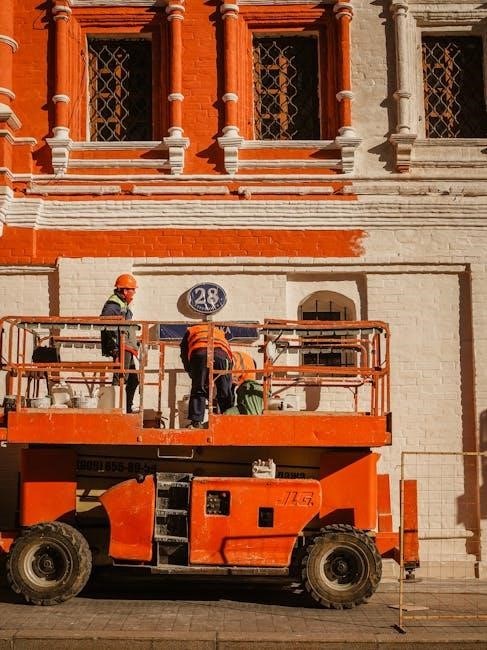
Safety Considerations for Manual Lift Tables
Prioritize safety by adhering to load limits, ensuring proper maintenance, and recognizing potential hazards like pinch points to prevent accidents during operation.
Load Capacity & Weight Limits
Understanding load capacity is paramount for safe manual lift table operation. These tables are engineered to handle specific weight limits, typically ranging from 400 LBS to 2,500 LBS, depending on the model and construction. Exceeding these limits compromises stability and increases the risk of mechanical failure, potentially leading to serious injury or damage.
Always verify the manufacturer’s stated capacity, clearly indicated on the lift table itself. This information should never be ignored. Consider not only the weight of the object being lifted but also any additional weight from containers, packaging, or operators applying force. Regularly inspect the lift table for any signs of wear, damage, or deformation, as these can reduce its load-bearing capacity.
Proper weight distribution is also crucial. Ensure the load is centered on the platform to maintain balance and prevent tipping. Unevenly distributed weight can create stress points and compromise the table’s structural integrity. Prioritizing adherence to weight limits and safe loading practices is essential for a secure working environment.
Proper Usage & Maintenance
Optimal performance and longevity of a manual lift table depend on correct usage and consistent maintenance. Before each use, inspect the table for any visible damage, loose parts, or obstructions. Ensure the lifting mechanism operates smoothly and that all controls function correctly. Avoid jerky movements or sudden stops, as these can strain the system.
Regular lubrication of moving parts, particularly the scissor joints or chain drive, is vital. This reduces friction, prevents wear, and ensures smooth operation. Clean the table regularly to remove dirt, debris, and any spilled substances. Periodically check and tighten all bolts and fasteners to maintain structural integrity.
Never attempt to modify or repair the lift table yourself unless you are a qualified technician. Improper repairs can compromise safety and void the warranty. Following these guidelines will maximize the lifespan and reliability of your manual lift table.
Potential Hazards & Prevention
Manual lift tables, while valuable, present potential hazards if not used cautiously. Pinch points around the lifting mechanism – especially scissor arms – pose a significant risk of injury. Unexpected lowering due to mechanical failure or improper operation can cause serious harm. Additionally, instability from uneven loading or placement on an unsuitable surface is a concern.
To mitigate these risks, always ensure the load is evenly distributed and within the table’s specified weight capacity. Never place hands or feet under the table while it’s in operation. Implement a regular inspection schedule to identify and address any mechanical issues promptly.
Proper training for all operators is crucial, emphasizing safe operating procedures and emergency shutdown protocols. Utilizing slow-release mechanisms carefully during lowering can prevent uncontrolled descent, enhancing overall safety.

Applications of Manual Lift Tables
Manual lift tables are widely used in industrial settings, warehousing, and ergonomic workstations, facilitating efficient material handling and assembly processes.
Industrial Settings & Manufacturing
Manual lift tables are indispensable assets within diverse industrial environments and manufacturing facilities, streamlining workflows and enhancing operational efficiency. Their robust construction and reliable performance make them ideal for handling heavy materials, components, and finished goods throughout the production process.
Specifically, these tables facilitate safer and more ergonomic loading and unloading of machinery, reducing the risk of worker strain and injury. They are frequently employed in assembly lines, providing adjustable work heights to optimize operator comfort and productivity.
Furthermore, manual lift tables support quality control inspections by presenting items at optimal viewing angles. The absence of electrical components in manual models makes them suitable for environments where sparks or electrical interference are concerns. Vestil and Presto lift tables, known for their quality, are commonly found in these settings, offering capacities ranging from 400 to 2,500 LBS.
Warehousing & Logistics
Manual lift tables play a crucial role in optimizing operations within warehousing and logistics centers, addressing the challenges of moving and positioning goods efficiently. They significantly reduce the physical strain on workers involved in picking, packing, and sorting processes, promoting a safer work environment.
These tables facilitate the ergonomic handling of boxes, pallets, and other inventory items, minimizing the risk of musculoskeletal disorders. Their adjustable height capabilities allow for comfortable access to various levels of storage, improving workflow speed and accuracy.
Manual lift tables are particularly valuable in areas with limited space, offering a compact solution for elevating and lowering loads. The mechanical operation, unlike hydraulic systems, eliminates the risk of oil leaks, making them suitable for sensitive storage areas. Manufacturers like HoF Equipment Company offer robust options, including scissor lift tables, designed for demanding warehouse applications.
Ergonomic Workstations & Assembly Lines
Manual lift tables are integral to creating ergonomic workstations and streamlining assembly line processes, prioritizing worker comfort and productivity. By adjusting work surface height, they eliminate awkward bending and stretching, reducing fatigue and the risk of repetitive strain injuries; This is especially crucial in tasks requiring prolonged standing or detailed manipulation of components.
In assembly lines, these tables facilitate the smooth flow of materials, bringing workpieces to the optimal height for each operator. This minimizes wasted motion and enhances assembly speed. The availability of single or double scissor lift options, with varying capacities (like those from Vestil and Presto), allows for customization to specific assembly needs.
The mechanical advantage offered by chain drive lift tables further simplifies heavy lifting, contributing to a safer and more efficient work environment. Ultimately, manual lift tables improve overall workstation design and boost operational effectiveness.