
The Pedestrian PDF: A Comprehensive Overview
Pedestrian safety is a crucial aspect of urban planning, encompassing infrastructure and strategies for safe movement. This document explores various facets,
from historical contexts to future trends, including guard rails and comprehensive road studies.
It delves into pedestrian passages, streets, and crossings – like zebra crossings – alongside addressing challenges such as “corrientadas y traiciones,”
and the impact of street addressing on navigation.
Pedestrian safety represents a fundamental pillar of successful urban environments, demanding a holistic approach to infrastructure development and proactive safety measures. Historically, responses to pedestrian risk, such as the implementation of guard rails – familiar sights in places like the UK – were engineering solutions prioritizing vehicle flow.
However, modern planning increasingly centers the pedestrian experience. This shift necessitates a deep understanding of pedestrian flow, accessibility, and the integration of pedestrian zones with surrounding living quarters. A comprehensive approach considers not just crossings, but also sidewalks and the impact of seemingly minor details like clear street addressing for easy navigation.
Furthermore, effective pedestrian infrastructure isn’t solely about physical structures; it’s about creating environments where pedestrians feel safe and prioritized. This involves ongoing studies of roads and streets, and anticipating future challenges, ensuring a walkable and accessible urban landscape for all.
Defining “The Pedestrian” in Urban Planning
Defining “the pedestrian” within urban planning extends beyond simply identifying someone walking. It encompasses understanding their diverse needs, vulnerabilities, and behaviors within the built environment. A pedestrian isn’t merely a user of space, but a vital component of a thriving urban ecosystem.
This definition necessitates considering individuals on sidewalks, but also those momentarily traversing streets – even if not within designated crossings. It acknowledges that pedestrians aren’t always predictable, and planning must account for potential risks and unexpected movements.
Furthermore, the concept of “the pedestrian” must be inclusive, encompassing individuals with disabilities, families with children, and the elderly, all requiring tailored infrastructure considerations. It’s about recognizing that a pedestrian’s experience is shaped by the entire streetscape, from building frontages to the clarity of street addressing, influencing their sense of safety and belonging.
Historical Context of Pedestrian Infrastructure
Historically, pedestrian infrastructure was often an afterthought, evolving alongside vehicular traffic. Early urban centers prioritized movement of goods and carriages, with pedestrians largely relegated to whatever space remained. Sidewalks, as we know them, developed gradually, initially as raised pathways to avoid mud and street debris.
The rise of the automobile in the 20th century dramatically shifted priorities, often at the expense of pedestrian safety and comfort. However, growing awareness of pedestrian accidents and the desire for more livable cities spurred a re-evaluation.

The introduction of features like guard rails – familiar in places like the UK – represented an engineering response to pedestrian-vehicle conflicts. Simultaneously, the concept of pedestrianized streets and shopping areas emerged, reclaiming space for non-motorized users. This historical trajectory demonstrates a continuous negotiation between competing demands for urban space and a growing recognition of the pedestrian’s right to safe and accessible environments.
Types of Pedestrian Infrastructure
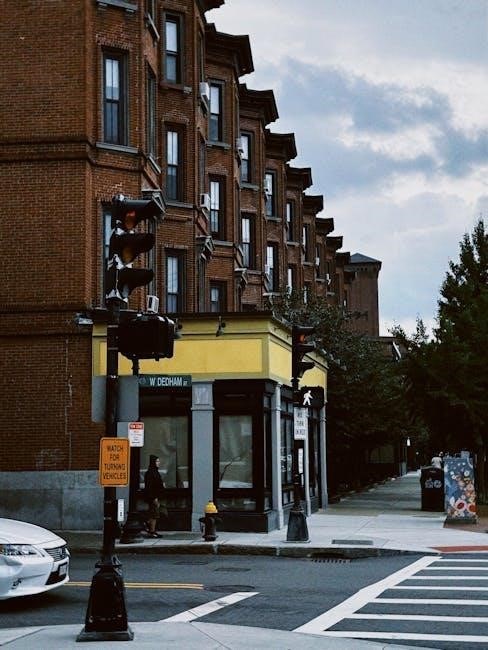
Pedestrian infrastructure encompasses diverse elements: passages, areas, streets, and sloped driveways. These designs prioritize safe access and flow, creating walkable environments for all users.
Pedestrian Passages vs. Pedestrian Areas
Distinguishing between pedestrian passages and areas is fundamental in urban design. A passage often functions more like a designated route, akin to a road specifically for foot traffic, facilitating movement through a space. Think of a covered walkway connecting buildings or a marked crossing point.
Conversely, a pedestrian area represents a broader, more open space prioritized for pedestrians. It’s less about directed transit and more about creating a zone for lingering, socializing, and enjoying the surroundings. This could be a town square or a plaza.
The key difference lies in the intent: passages connect, while areas accommodate. One user online inquired about this very distinction, noting a passage feels road-like, while an area is open. Effective planning considers how these two types of spaces complement each other, creating a cohesive and pedestrian-friendly urban fabric.
Pedestrian Streets & Shopping Streets
Pedestrian streets, distinct from traditional roadways, prioritize foot traffic, often featuring limited or prohibited vehicular access. These spaces foster a vibrant atmosphere, encouraging browsing and social interaction. Shopping streets, a common type of pedestrian street, integrate retail establishments, creating a commercial hub.
However, a pedestrian street with shops and residential buildings isn’t necessarily a mall; it’s simply a pedestrian (shopping) street, blending commerce and living. The absence of cars enhances the shopping experience and promotes a sense of community;
Interestingly, shoppers often navigate these streets based on familiarity rather than postal addresses. In the UK, store numbers are becoming less common on shopfronts, relying instead on recognition and local knowledge. This highlights the importance of intuitive wayfinding and a memorable streetscape for successful pedestrian and shopping street design.
Sloped Driveways & Pedestrian Access
Sloped driveways, commonly referred to as “descente de garage” in French, present unique challenges for pedestrian safety and accessibility. These inclines, designed for vehicular access to garages, often intersect pedestrian walkways, creating potential conflict points.
Ensuring safe pedestrian passage requires careful consideration of design elements. Adequate visibility is paramount, minimizing the risk of collisions. Tactile paving and clear signage can guide pedestrians, particularly those with visual impairments.
Furthermore, the slope itself can pose difficulties for individuals with mobility limitations. Compliance with accessibility standards, such as providing ramps or level resting areas, is crucial. Proper lighting is also essential, especially during nighttime hours, to enhance visibility and reduce the risk of accidents along these sloped pathways.
Sidewalks and Their Role in Pedestrian Flow
Sidewalks are fundamental components of pedestrian infrastructure, directly influencing pedestrian flow and overall urban accessibility. They provide dedicated spaces for walking, separating pedestrians from vehicular traffic and enhancing safety. Effective sidewalk design considers width, surface material, and the presence of obstructions.
Sufficient width is crucial to accommodate varying pedestrian volumes and allow for comfortable passage, especially in densely populated areas. Smooth, even surfaces minimize tripping hazards and improve accessibility for individuals using wheelchairs or strollers.
Strategic placement of street furniture, landscaping, and signage is essential to avoid impeding pedestrian flow. Maintaining clear pathways and ensuring adequate lighting contribute to a safe and welcoming pedestrian environment. Sidewalks aren’t merely pathways; they are vital connectors within the urban fabric, fostering walkability and community interaction.

Pedestrian Safety Measures
Effective pedestrian safety relies on guard rails, nighttime strategies, and well-designed crossings. These measures mitigate risks, prioritizing vulnerable road users and enhancing urban safety.
Guard Rails and Pedestrian Protection
Guard rails, familiar sights along British roads, represent an engineering response to pedestrian safety concerns. These barriers were developed based on models prioritizing vehicle containment, indirectly offering pedestrian protection by channeling traffic flow. However, their effectiveness is debated, as they can sometimes create new hazards or a false sense of security.
Modern pedestrian protection extends beyond physical barriers. It encompasses strategic placement of railings to guide foot traffic, particularly at vulnerable points like road corners or near busy intersections. Furthermore, advancements in materials and design focus on energy absorption to minimize impact severity in the event of a collision.
Effective guard rail systems are not merely about preventing vehicle encroachment onto sidewalks; they are integrated into a broader safety strategy that includes clear signage, adequate lighting, and pedestrian-friendly streetscapes. The goal is to create a layered defense, protecting pedestrians from both direct vehicle impact and indirect hazards arising from traffic patterns.
Nighttime Pedestrian Safety Strategies
Nighttime presents heightened risks for pedestrians due to reduced visibility. Effective strategies require a multi-faceted approach, beginning with enhanced illumination. Well-lit streets, particularly at crossings and along sidewalks, are paramount. However, lighting must be carefully designed to avoid glare, which can impair vision.
Reflective materials play a crucial role. Pedestrian clothing with reflective elements significantly increases visibility to drivers. Similarly, incorporating reflective markings on crosswalks and sidewalks enhances their conspicuity. Beyond physical enhancements, public awareness campaigns educating both pedestrians and drivers about nighttime hazards are essential.
A 2025 guide emphasizes strategies to improve pedestrian safety at night, suggesting a focus on high-visibility enforcement of traffic laws and the implementation of pedestrian-activated flashing beacons at crossings. These beacons alert drivers to the presence of pedestrians, providing an extra layer of protection during hours of darkness.
Pedestrian Crossings: Global Variations
Pedestrian crossings exhibit significant diversity worldwide, reflecting differing traffic regulations and cultural norms. In the UK, and many other countries, the “zebra crossing” – characterized by bold black and white stripes – is a familiar sight, granting pedestrians priority. However, American terminology differs; they generally refer to these as “crosswalks,” often marked with white lines.
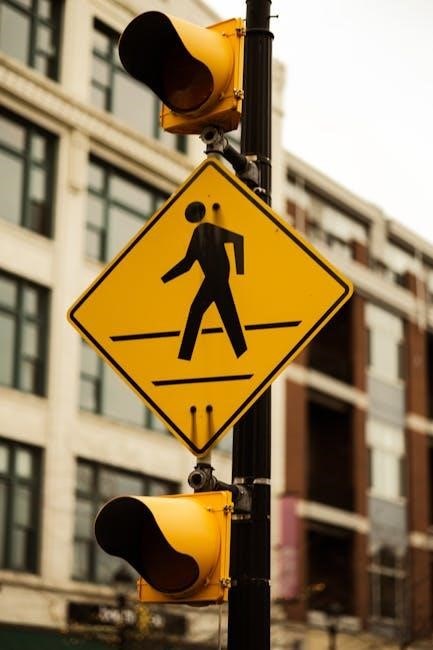
Beyond basic markings, crossing designs vary. Some countries employ pedestrian phases at traffic signals, halting all vehicular traffic to allow safe passage. Others utilize raised crosswalks, physically slowing vehicles and increasing pedestrian visibility. Furthermore, the presence of refuge islands – raised areas within the roadway – provides a safe haven for pedestrians crossing wider streets.
The engineering solutions, like guard rails familiar in Britain, prioritize pedestrian safety based on established models. Understanding these global variations is crucial for urban planners aiming to create safe and accessible pedestrian environments, adapting designs to local contexts and needs.
Zebra Crossings (UK & Beyond)
Zebra crossings, instantly recognizable by their distinctive black and white stripes, are a cornerstone of pedestrian safety in the United Kingdom and numerous other nations. These markings designate a legal crossing point where pedestrians have priority, and drivers are legally obligated to yield. The design’s effectiveness stems from its high visibility, alerting drivers to the potential presence of pedestrians.
Originally an engineering solution to address pedestrian safety concerns, zebra crossings evolved from earlier, less defined crossing points. Their implementation often includes flashing amber lights, particularly during periods of low light or adverse weather, further enhancing visibility. Beyond the UK, countries like Australia, New Zealand, and several African nations also utilize zebra crossings.
However, it’s important to note that the specific rules governing zebra crossings can vary. Understanding these local regulations is vital for both pedestrians and drivers to ensure safe road usage.
American Terminology for Pedestrian Crossings
In the United States, the term “zebra crossing” is not commonly used to describe the black and white striped pedestrian crosswalks. Instead, Americans typically refer to them as “crosswalks,” “pedestrian crossings,” or, more specifically, “striped crosswalks” to differentiate them from unmarked crossings. This difference in terminology can sometimes lead to confusion for visitors from countries where “zebra crossing” is standard.
While the function remains the same – providing a designated area for pedestrians to safely cross the road – the linguistic distinction highlights regional variations in road safety vocabulary. American crosswalks may also be accompanied by signage, flashing lights, or pedestrian-activated signals to further enhance safety and driver awareness.
Understanding this difference is crucial for clear communication and promoting pedestrian safety, especially in international contexts or areas with diverse populations.

Pedestrian Infrastructure & Urban Design
Urban design significantly impacts pedestrian experiences, integrating zones with living quarters and prioritizing safety through comprehensive road studies. Street addressing aids navigation,
enhancing accessibility.
The Impact of Street Addressing on Pedestrian Navigation
Street addressing, while seemingly straightforward, plays a surprisingly subtle yet vital role in pedestrian navigation within urban environments. Traditionally, shoppers haven’t relied heavily on postal addresses to locate stores, particularly in places like the UK, where storefronts often omit address numbers.
However, as cities evolve and become more complex, a clear and consistent addressing system becomes increasingly important for pedestrians, especially those unfamiliar with the area. Effective street addressing facilitates easier wayfinding, allowing individuals to locate destinations independently and confidently.
This is particularly crucial for emergency services, but also benefits tourists, delivery personnel, and residents alike. A well-maintained and visible addressing system complements pedestrian infrastructure, contributing to a more navigable and pedestrian-friendly urban landscape. It’s a foundational element often overlooked in broader urban design considerations.
Integrating Pedestrian Zones with Living Quarters
The successful integration of pedestrian zones with residential areas requires careful planning to foster vibrant, livable communities. A pedestrian street featuring both shops and living quarters shouldn’t be equated with a traditional shopping mall; it’s a distinct urban space.
Such zones benefit from a mixed-use approach, encouraging foot traffic and creating a sense of community. However, it’s essential to address potential conflicts between commercial activity and residential tranquility. Noise mitigation, appropriate lighting, and considerate waste management are crucial considerations.
Furthermore, ensuring accessibility for all residents, including those with mobility impairments, is paramount. Thoughtful design can create a harmonious blend of commercial and residential life, enhancing the quality of life for all who inhabit and visit these spaces. Prioritizing pedestrian comfort and safety is key to a thriving integration.
Bike and Pedestrian Safety Improvements
Town officials are increasingly focused on bolstering both pedestrian and bicycle safety through dedicated initiatives. These often involve comprehensive studies of existing road and street infrastructure, aiming to identify and mitigate potential hazards for vulnerable road users.
Improvements frequently center around enhancing visibility, particularly at crossings. This can include brighter lighting, clearer signage, and the implementation of high-visibility crosswalk markings. Separating bike lanes from both vehicular traffic and pedestrian walkways is another crucial strategy.
Furthermore, reducing vehicle speeds in areas with high pedestrian and cyclist activity is essential. Traffic calming measures, such as speed bumps and narrowed roadways, can effectively achieve this. Continuous monitoring and evaluation of implemented improvements are vital to ensure their effectiveness and adapt to evolving needs.
Comprehensive Road & Street Studies for Pedestrian Safety
Easton town officials recently discussed ongoing efforts to enhance pedestrian and bike safety, prioritizing a comprehensive study of the town’s roads and streets. These studies are vital for identifying areas with high pedestrian traffic and potential conflict points with vehicles.
A thorough assessment includes analyzing crash data, pedestrian volumes, and existing infrastructure. This data informs recommendations for improvements, such as adding crosswalks, improving lighting, and adjusting signal timings. The studies also evaluate the effectiveness of current safety measures.
Furthermore, these assessments consider factors like sidewalk accessibility, street connectivity, and the presence of visual obstructions. The goal is to create a safer, more walkable environment for all residents, reducing the risk of pedestrian-vehicle collisions and promoting active transportation. Regular updates and re-evaluations are crucial.

Challenges in Pedestrian Planning

Pedestrian planning faces hurdles like safety concerns and figurative challenges – “corrientadas y traiciones” – alongside ensuring adequate flow and accessibility for all users.
Addressing Pedestrian Safety Concerns
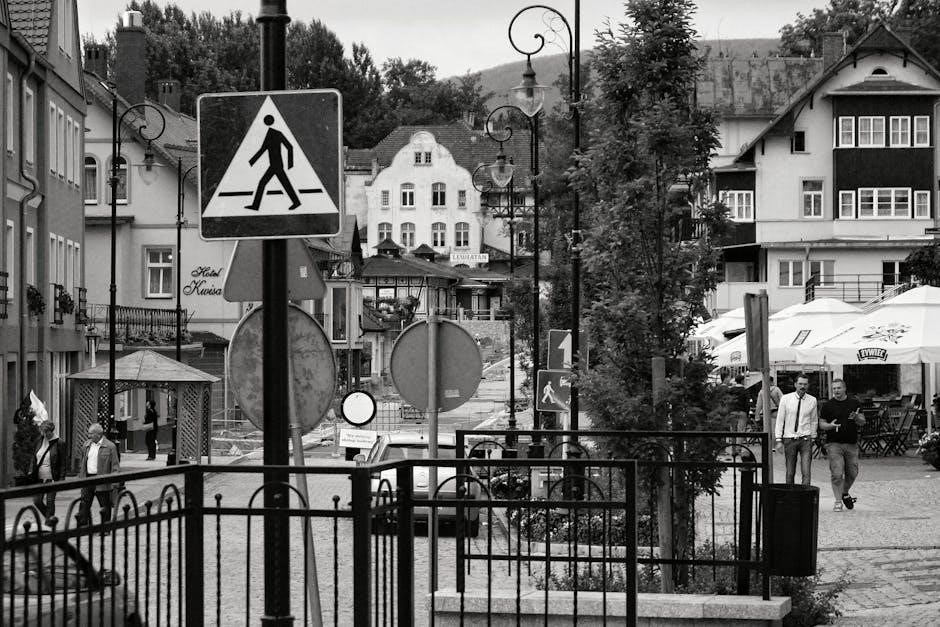
Pedestrian safety remains a paramount concern in urban environments, demanding proactive and multifaceted solutions. Historically, engineering approaches, such as guard rails – familiar sights on British roads – were implemented to mitigate risks based on prioritizing vehicular flow. However, modern planning recognizes the need for a more holistic approach.
Comprehensive road and street studies, like those currently underway in Easton, are vital for identifying hazardous locations and implementing targeted improvements. These studies must consider not only physical infrastructure but also behavioral factors influencing pedestrian and driver interactions. Nighttime safety is a specific area requiring attention, as highlighted in recent guides focused on strategies to improve visibility and awareness.
Furthermore, addressing pedestrian safety necessitates acknowledging the challenges of navigating urban spaces, where unexpected situations – metaphorical “corrientadas y traiciones” – can arise. Effective planning prioritizes creating predictable and safe environments for all pedestrians.
Dealing with “Corrientadas y Traiciones” (Figurative Challenges)
The phrase “corrientadas y traiciones,” originating from song lyrics, metaphorically represents the unexpected difficulties pedestrians face in urban landscapes. These challenges aren’t necessarily infrastructural failures, but rather stem from unpredictable human behavior and situational complexities. They encompass everything from distracted walking to drivers failing to yield at crossings.
Addressing these figurative challenges requires a shift beyond purely physical solutions. While improved infrastructure – like clearly marked pedestrian passages and well-lit streets – is crucial, fostering a culture of mutual respect and awareness is equally important. This involves public awareness campaigns promoting responsible pedestrian and driver conduct.
Furthermore, urban design should prioritize predictability and minimize potential conflicts. Thoughtful placement of street furniture, clear sightlines, and intuitive wayfinding can all contribute to a safer, more navigable environment, mitigating the impact of these “unexpected turns” in the urban flow.
The Importance of Pedestrian Flow and Accessibility
Pedestrian flow, the ease and efficiency with which people move through urban spaces, is paramount to a thriving city. Accessibility, ensuring everyone – including those with disabilities – can navigate these spaces comfortably, is intrinsically linked. Poor flow leads to congestion, frustration, and potentially unsafe conditions, while limited accessibility excludes significant portions of the population.
Effective pedestrian planning prioritizes direct, unobstructed routes, minimizing conflicts with vehicular traffic. Sidewalk width, the presence of pedestrian crossings, and the avoidance of unnecessary obstacles all contribute to smoother flow. Integrating pedestrian zones with living quarters and shopping streets enhances convenience and encourages walking.
Furthermore, clear and consistent street addressing is vital for pedestrian navigation, especially for visitors. A well-designed pedestrian network isn’t merely about getting from point A to point B; it’s about creating a pleasant, inclusive, and efficient experience for all users.

Future Trends in Pedestrian Infrastructure
Pedestrian infrastructure is evolving with technological advancements, focusing on safety and sustainability. Expect smart crossings, data-driven planning, and pedestrian zones
integrating seamlessly with urban life.
Technological Advancements for Pedestrian Safety
Technological innovations are poised to revolutionize pedestrian safety, moving beyond traditional measures. Smart crosswalks, utilizing sensors and intelligent lighting, can detect pedestrians and alert drivers, significantly reducing collision risks. These systems dynamically adjust timing based on real-time pedestrian presence.
Furthermore, advancements in vehicle technology, such as automatic emergency braking (AEB) with pedestrian detection, are becoming increasingly prevalent; Data analytics, leveraging information from connected devices and urban sensors, allows for the identification of high-risk areas and proactive implementation of safety measures.
Mobile applications can also play a role, providing pedestrians with real-time information about traffic conditions and safe crossing opportunities. The integration of augmented reality (AR) could enhance pedestrian awareness by overlaying safety information onto their view of the street. Ultimately, these technologies aim to create a more predictable and safer environment for all pedestrians.
Sustainable Pedestrian Planning
Sustainable pedestrian planning prioritizes long-term environmental, social, and economic well-being. It moves beyond simply accommodating pedestrians to actively encouraging walking as a primary mode of transportation. This involves creating walkable communities with mixed-use developments, reducing reliance on private vehicles.
Green infrastructure, such as tree-lined sidewalks and permeable pavements, enhances the pedestrian experience while mitigating stormwater runoff. Prioritizing pedestrian access to public transportation hubs fosters seamless multimodal journeys. Designing for all abilities ensures inclusivity, accommodating individuals with disabilities and varying mobility levels.
Furthermore, sustainable planning considers the impact of pedestrian infrastructure on local ecosystems and promotes the use of eco-friendly materials. Reducing the heat island effect through shading and vegetation improves pedestrian comfort. Ultimately, it’s about creating vibrant, healthy, and resilient urban spaces centered around people, not cars.
The Evolving Role of Pedestrian Zones in Cities
Pedestrian zones are increasingly recognized as vital components of thriving urban centers, shifting from simple traffic-free areas to dynamic public spaces. Historically focused on retail, their role now expands to encompass social interaction, cultural events, and enhanced quality of life.
The rise of “pedestrian streets” – often incorporating shops and living quarters – demonstrates this evolution, creating vibrant mixed-use environments. These zones contribute to reduced air pollution, noise levels, and traffic congestion, fostering healthier communities. Temporary pedestrianization initiatives, testing permanent changes, are gaining popularity.
Technological integration, like smart lighting and interactive installations, further enhances the pedestrian experience. Successful pedestrian zones prioritize accessibility, inclusivity, and safety, becoming destinations in their own right. They are no longer simply passages, but places where people want to be, driving economic activity and community engagement.